I chose to record the part1 part of my Biomimicry Project, because during the course of my investigation I tried areas that were not relevant to my profession, including architecture and interior design. I think that when I touch the fields, I am not familiar with, the freshness and inspiration can be designed from different angles. In the Biomimicry Project I think there is a connection between the conch and the rotating escalator, such as the spiral pattern and stability.
Because the shape of the conch is very similar to the spiral staircases, I did a research about 10 BEST SPIRAL STAIRCASES IN LONDON.
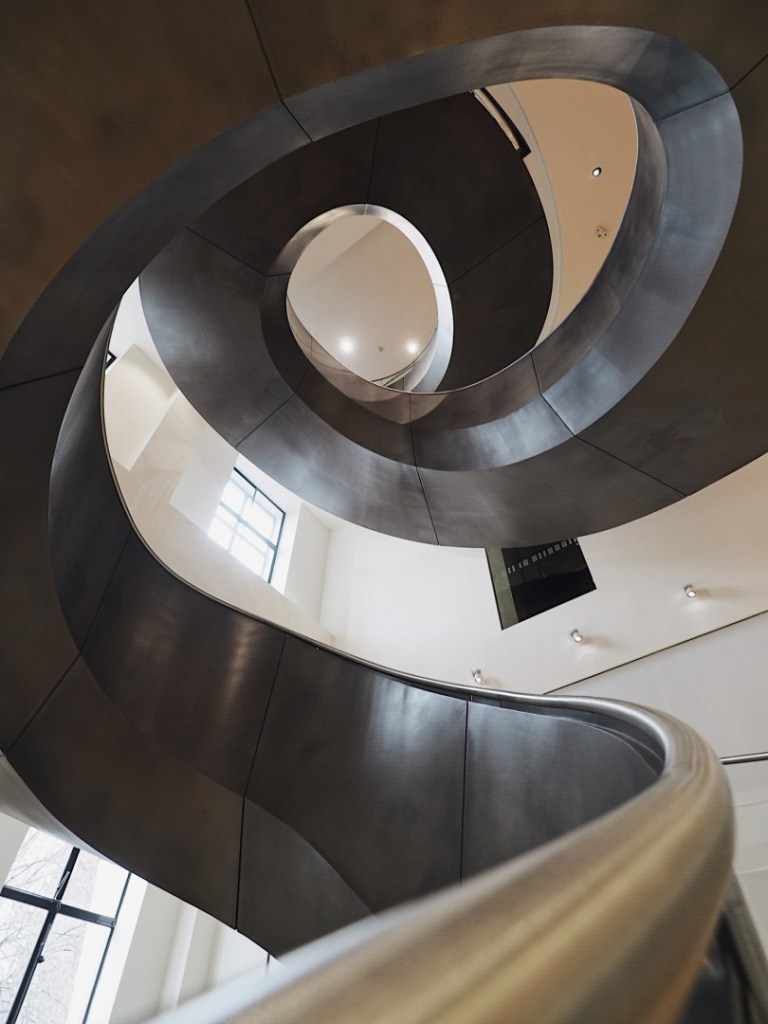

1. THE WELLCOME COLLECTION
There’re many reasons to visit The Wellcome Collection in Euston. The free, fascinating exhibitions, lovely cafe and beautiful interiors all making it worth a trip. But if you’re still not convinced, at least go for this staircase.
2. HEAL’S DEPARTMENT STORE
There’re not many furniture shops that can fill you with wonder. But Heal’s on Tottenham Court Road has a trick up its sleeve.
3. FORTNUM & MASON’S STAIRS
Founded in 1707, this staircase was a centerpiece of the iconic London shop’s refurb to celebrate its 300th anniversary. Designed by architects Jestico and Whiles, it wasn’t universally liked when first unveiled. The Guardian suggested it “looks as if it has been stripped from a Las Vegas shopping mall, or some new Middle Eastern airport.”
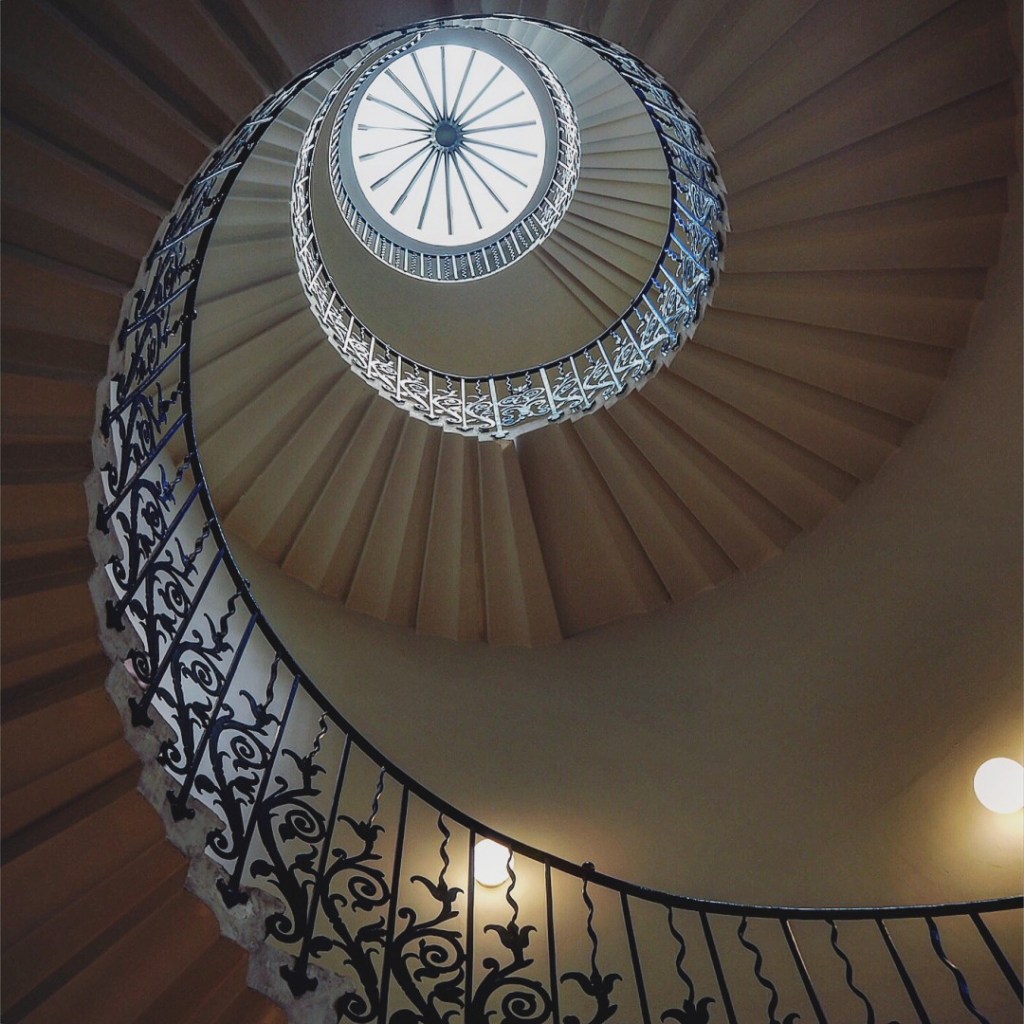
4. THE TULIP STAIRS
One of the highlights of Queen’s House in Greenwich is this staircase. Designed by Inigo Jones in 1635 it features a blue tulip pattern along the railings, inspired by ‘Tulip-mania’ in the 17th century, when we had imported a Dutch King (William III) and the color flowers and bulbs could fetch £1,000s.
5. CITY HALL
A more contemporary addition to the best spiral staircase list, City Hall’s whirl is no less impressive.
6. THE DEAN’S STAIR
The first of Sir Christopher Wren’s staircases to make the list, the Dean’s Stair in St Paul’s is one of the most impressive sights in the Cathedral.
7. BARRY’S PARLIAMENT STAIR
One of the lesser-known spiral staircases, this one is
hidden inside a truly iconic building, Victoria Tower in the Houses of
Parliament.
Designed by Sir Charles Barry, if you looked down, you’re
staring straight into the ‘well’ onto the floor below. Today it comes in handy
because it tells you exactly when HM Queen has entered parliament and that you
should be raising the Royal Standard.
8. THE MONUMENT
Standing as the ‘world’s tallest free-standing stone column’ (catchy). The Monument commemorates The Great Fire of London in 1666.
Designed by Sir Christopher Wren and Robert Hooke, those cunning chaps also built it for another purpose too. No, not just for epic Instagram shots, but as a pop-up laboratory for The Royal Society’s scientific experiments. An ideal shape for a telescope, Wren was thwarted by the location, the ceaseless footfall near London Bridge shaking his instruments and causing him to abandon the plan.
9. THE COURTAULD GALLERY STAIRS
10. THE LUTYENS’ STAIR
Part of the former Midland’s Bank HQ, 27 Poultry is now occupied by The Ned Hotel and almost every part of it is photogenic.
Edwin Lutyens (whose nickname ‘Ned’ gives the hotel its name) was a fan of spiral staircases and designed this 15-floor wonder for the original banker inhabitants in the 1920s.