
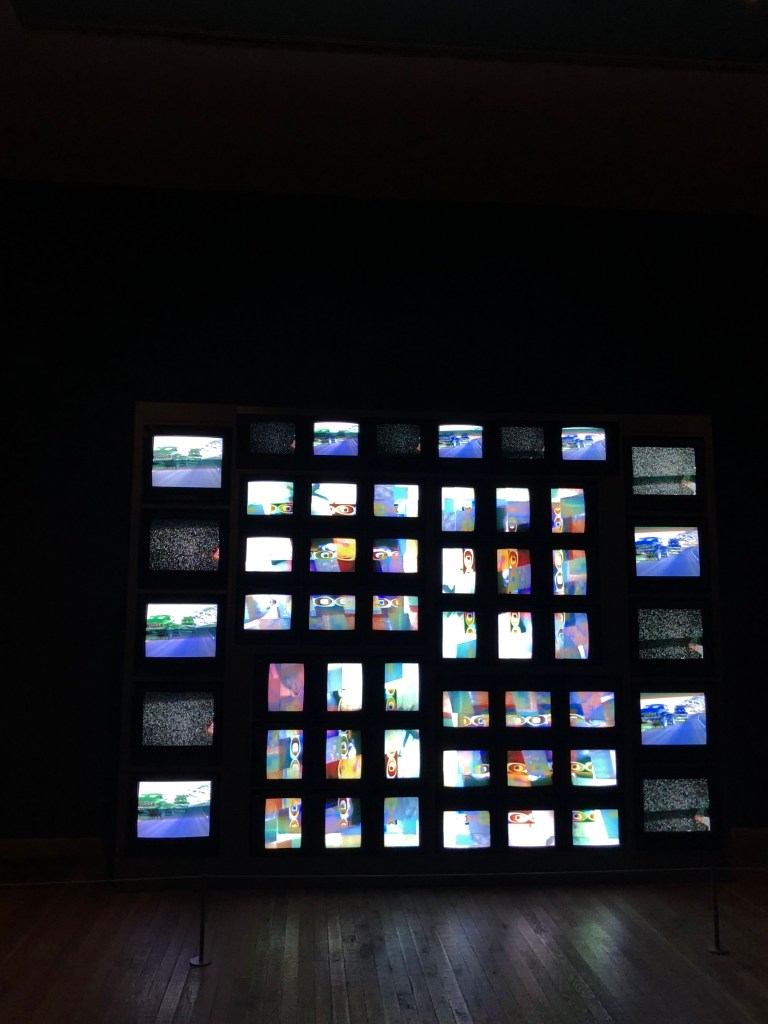
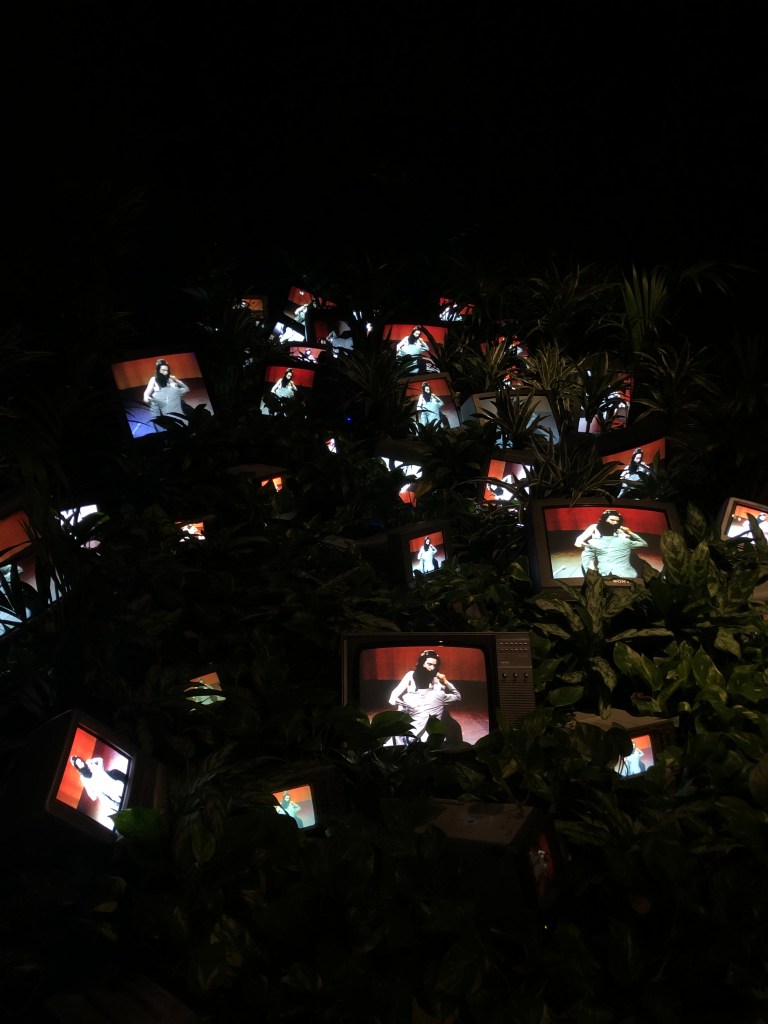
I visited the exhibition of NamJune Paik at Tate Modern. NamJune Paik is a typical Fluxus artist, mainly developed in Japan and the United States. In the 1960s and 1970s, it used a lot of interesting video and installations with mass media.
After the first exhibition, he collaborated with Japanese engineer SHUYA ABE to develop a video synthesizer using radio channel control, which successfully reorganized and processed the image electronically and combined it with the TV signal. In addition, the advanced handheld video equipment at that time also became another creative material under his clever use, and created a series of works, such as “TV Cello” (1971), “TV Buddha” (1974).
NamJune Paik used the SONY video equipment to make a closed-loop video recording, in which the TV Buddha is the most representative. He took out his antique collection, a Buddha statue and placed a modern TV on the opposite side. Combined with timely video recording, the big Buddha of the entity looks at another big Buddha produced on the TV screen. This is a very conflicting but revealing Zen work, which allows people to constantly think about the issues of the East and the West, the past and the present, the truth and the reproduction.

