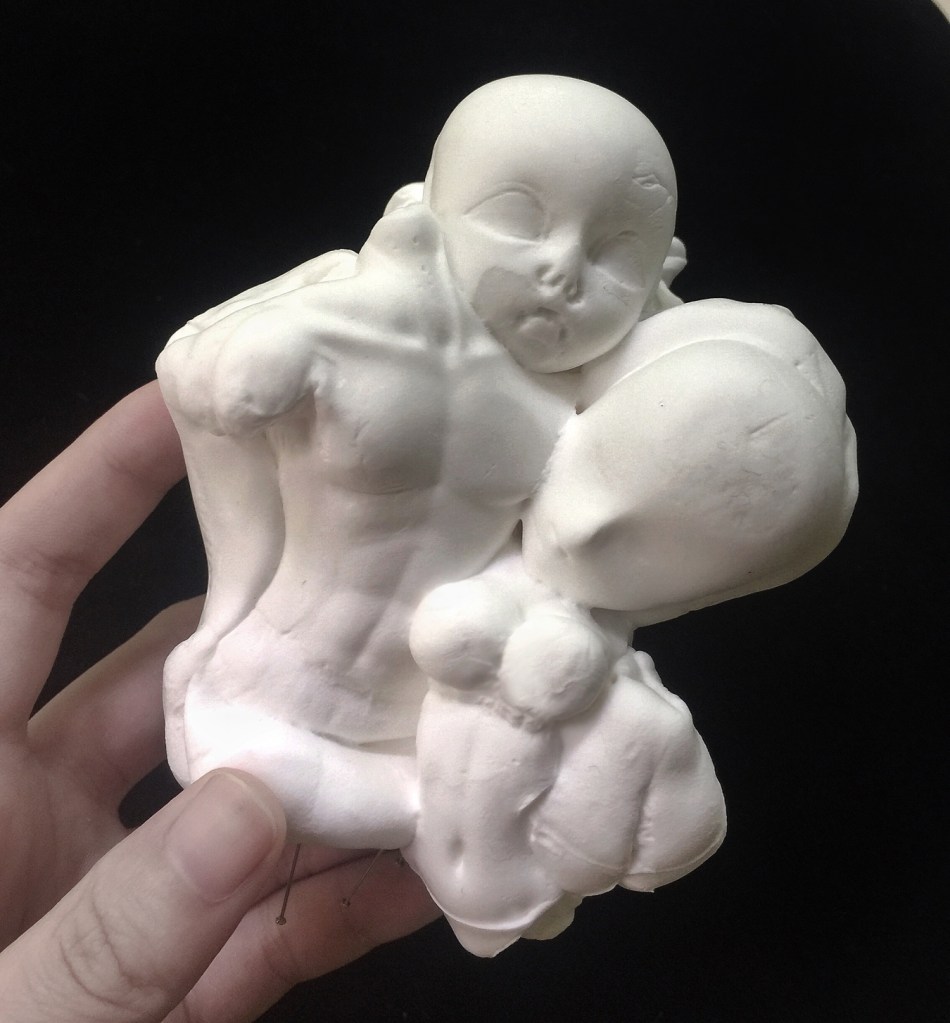
I tried to make a small human sculpture with clay, and I did this body sculpture mainly to express the concept of multiple personality. The whole sculpture consists of different body parts and multiple head structures. Combining the different parts conveys the complexity and reorganization of personality. In the early days of design, I looked at books about sculpture and investigated the stability of different clays.
I think that the character sculpture is a sculpture art that is shaped by various characters from ancient and modern times. It refers to the use of various plastic materials or hard materials that can be carved and engraved to create a visual and touchable artistic figure with a certain space. The art that reflects social life, expresses the artist’s aesthetic feelings, aesthetic feelings, and aesthetic ideals. Different people can make the sculptures they want according to their own ideas, and I think that sculpture is the most intuitive way to express the artist’s inner world and emotions.
I tried to learn 3D printing technology. 3D printing is generally carried out with extremely exaggerated patterns. From fabric, color and pattern, it is not only a visual impact, but also a 3D effect through 3D technology. a way of printing. I learned that paper printing, compared with 3D printing, is a printing method that displays fabric, color and pattern in a two-dimensional plane effect. When printing, the patterned side of the transfer paper is overlapped with the fabric, and after high temperature (220 degrees) hot pressing for about 1 minute, the disperse dye sublimes into a gaseous state and is transferred from the paper to the fabric. After the printing, it does not need to be washed, so that no sewage is generated, and the effect of bright colors, distinct layers, and delicate flower shape can be obtained. However, the existing ecological problems require a large amount of transfer paper in addition to the dyes and auxiliaries in the color paste, and these transfer papers are difficult to recycle after printing.
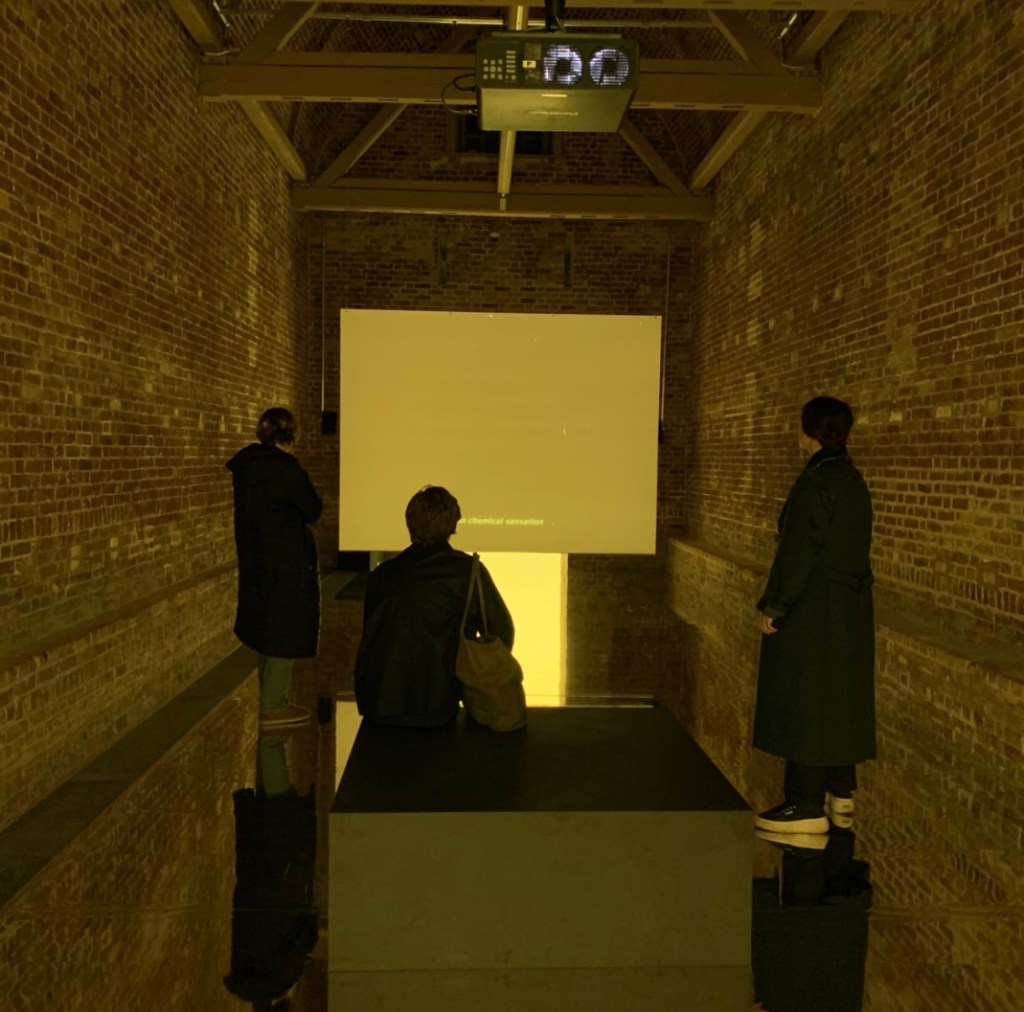
This week I went to visit the Patrick Staff exhibition. The entire exhibition space is very large, using images to express the author’s perception of identity. As each visitor enters the Patrick Staff exhibition, it will be shocked by the design of the exhibition hall. The design of the exhibition hall will give visitors a feeling like inside the living body, because the pipes are arranged above the exhibition hall, and the pipes will be arranged around the pipes. There are traces of dripping, and there are several iron buckets around the exhibition hall. Visitors can see the signs of corrosion on the iron bucket.
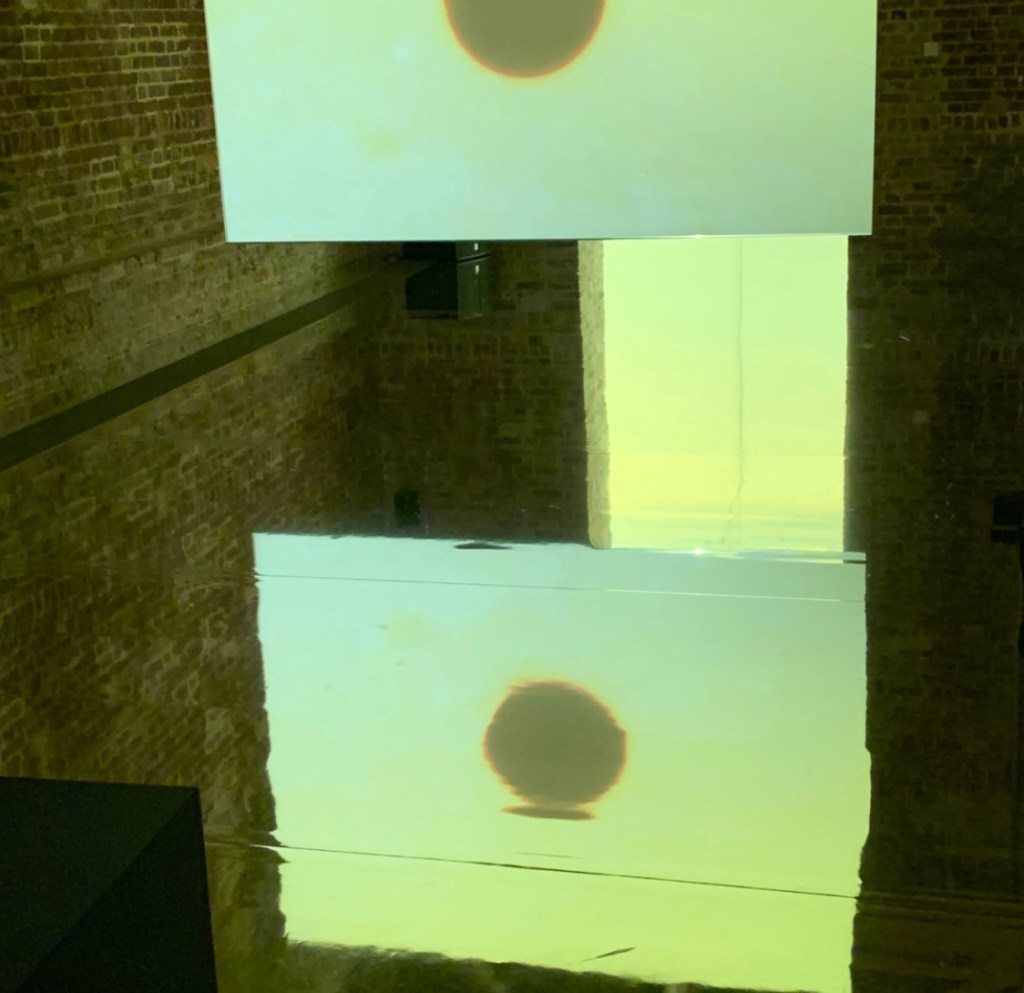
The most interesting thing about On Venus in the entire exhibition hall is the reflective ground with metal on the bottom of the screen. The reflective ground and images form a mirror image, giving visitors a feeling of being in another space. In short, the entire exhibition hall presents the inner world that the artist wants to express and the interaction with the audience.
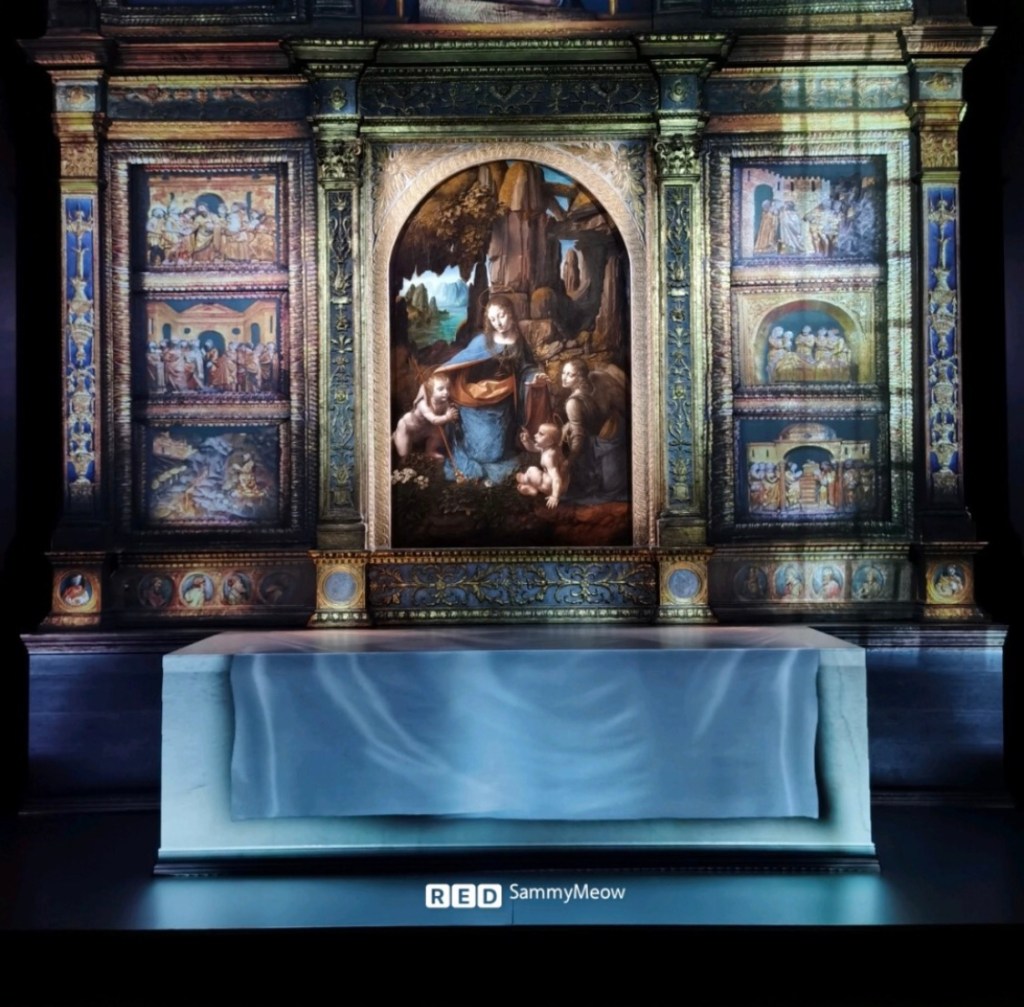
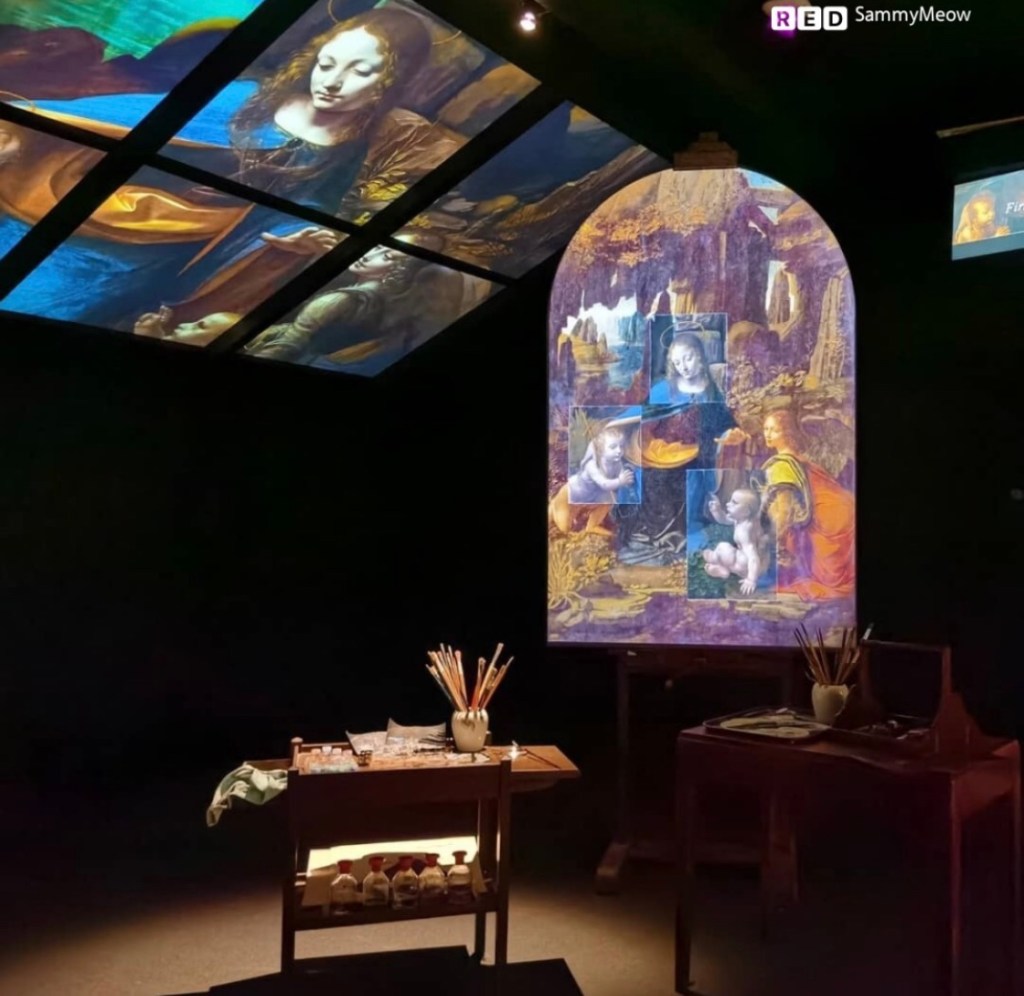
The Leonardo Experience exhibition shows Da Vinci’s “The Virgin of the Rocks” completed in 1508 by digital screens and projections. The entire exhibition hall is divided into four parts: the rocky landscape, the research studio, the light and shadow experience, and the imaginary church. It shows visitors the process of Da Vinci’s oil painting creation and the latest findings of the researchers.
The main hall “Imagined Church” reproduces the scene of the painting hanging inside the church with digital images. When the visitors walked the progress hall, the background music in the exhibition hall is the music of the church choir. The “Light and Shadow Experience” exhibition hall is more interactive with the audience. Visitors can adjust the light and shadow through touch screen control to better understand the changes that different light and shadow can bring to the work. For me, the entire exhibition hall has created an atmosphere for the audience to carefully watch each piece of work. Visitors can not only appreciate the details of each painting, but also feel the artist’s inner world more intuitively.
I visited the White Cube Art Gallery, which is the one of London’s most influential art galleries, founded in 1993 by Jay Jopling in London. Visitors can enjoy the works of British artists Antony Gormley, Gilbert & George, as well as exhibits from British new artists Michael Armitage, Eddie Peake and Rachel Kneebone.
The biggest feature of the White Cube Art Gallery is the all-white minimalist space design. When visitors enter the gallery, there will be a feeling of entering outer space without borders. The empty exhibition space is decorated with one or two pieces of artwork, which makes people deeply feel the connection between the work and the space, subverting the traditional experience of the past. The entire White Cube gallery has a powerful visual impact and a very strong space architectural design that presents simple materials in a gorgeous form, such as the wreckage of wire mesh and wood. In short, every corner of the exhibition and every design is full of minimalism that transcends reality.
I
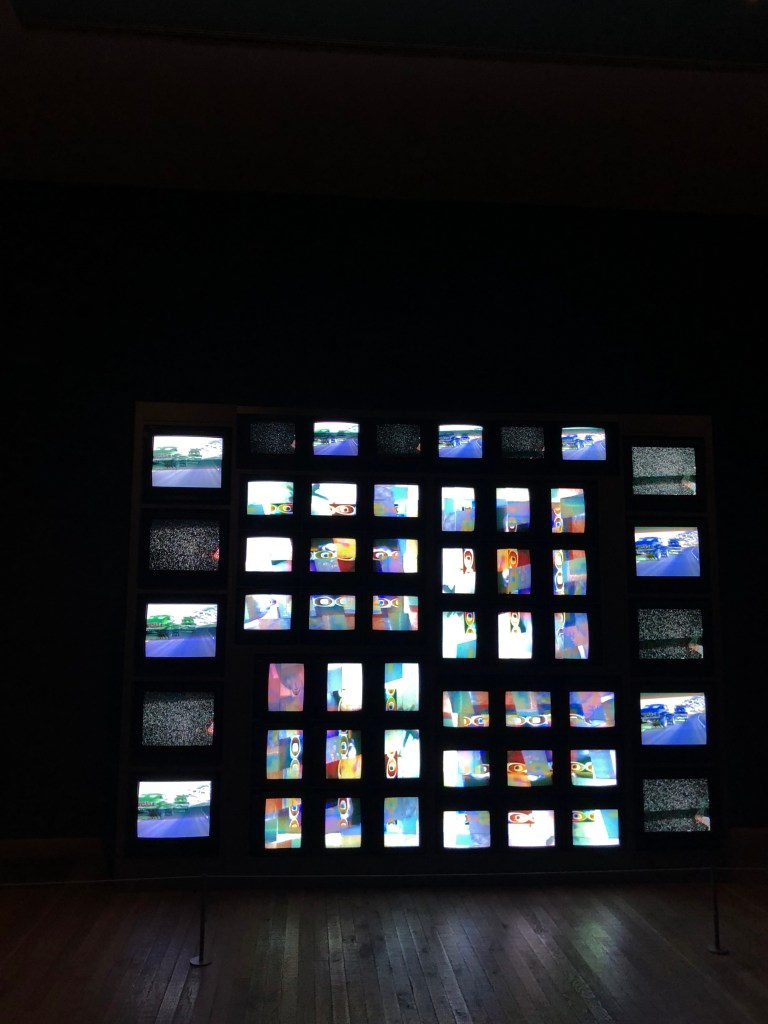
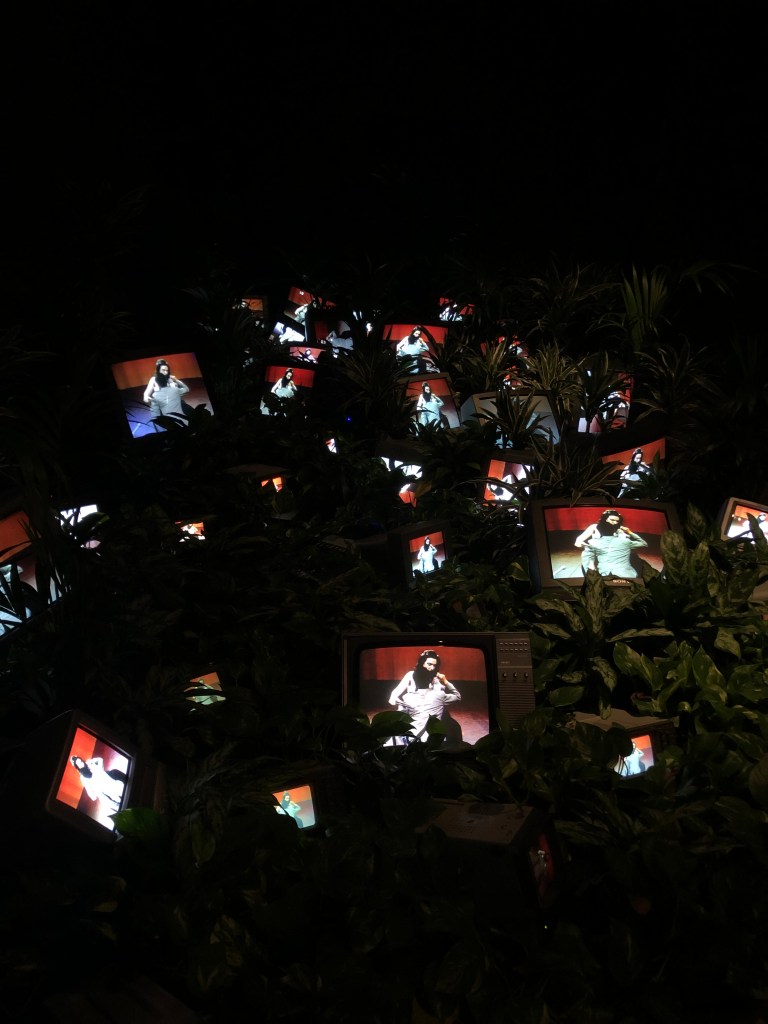
visited the exhibition of NamJune Paik at Tate Modern. NamJune Paik is a
typical Fluxus artist, mainly developed in Japan and the United States. In the
1960s and 1970s, it used a lot of interesting video and installations with mass
media.
After
the first exhibition, he collaborated with Japanese engineer SHUYA ABE to
develop a video synthesizer using radio channel control, which successfully
reorganized and processed the image electronically and combined it with the TV
signal. In addition, the advanced handheld video equipment at that time also
became another creative material under his clever use, and created a series of
works, such as “TV Cello” (1971), “TV Buddha” (1974).
NamJune
Paik used the SONY video equipment to make a closed-loop video recording, in
which the TV Buddha is the most representative. He took out his antique
collection, a Buddha statue and placed a modern TV on the opposite side.
Combined with timely video recording, the big Buddha of the entity looks at
another big Buddha produced on the TV screen. This is a very conflicting but
revealing Zen work, which allows people to constantly think about the issues of
the East and the West, the past and the present, the truth and the
reproduction.
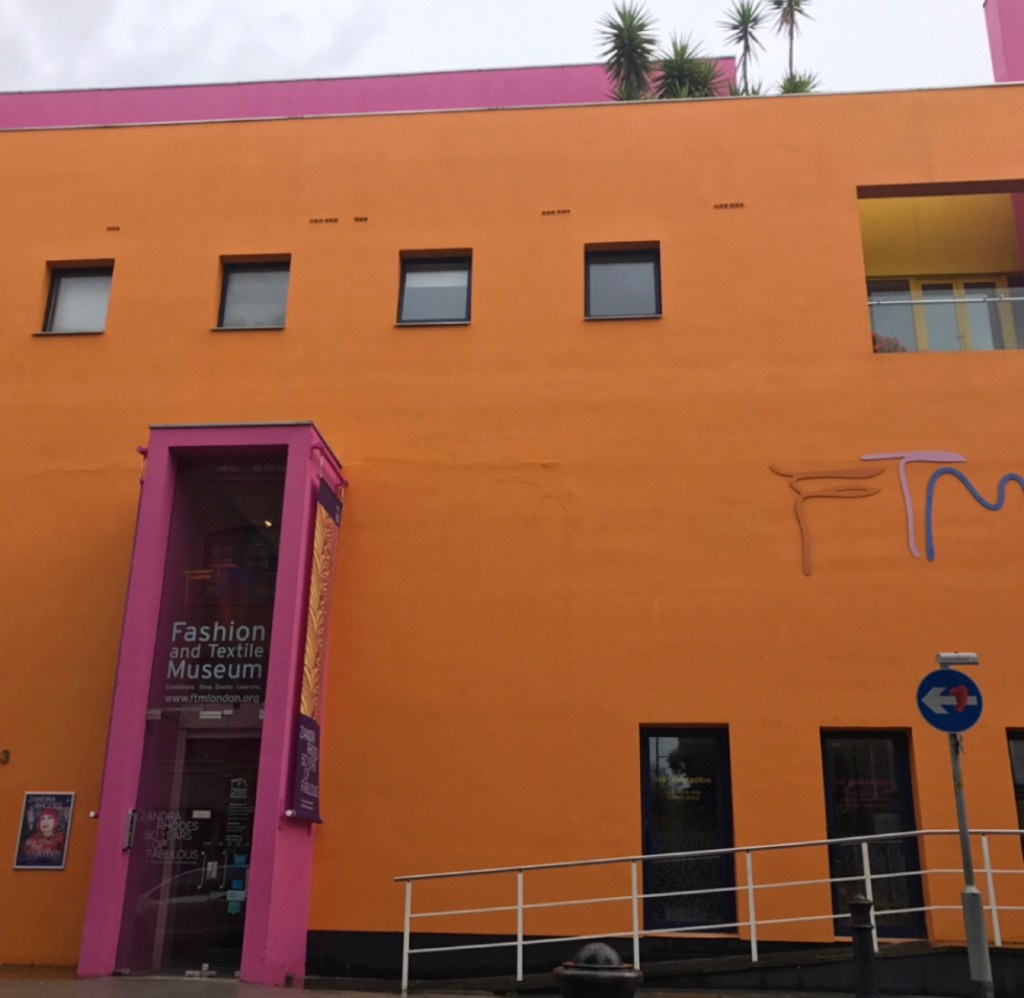
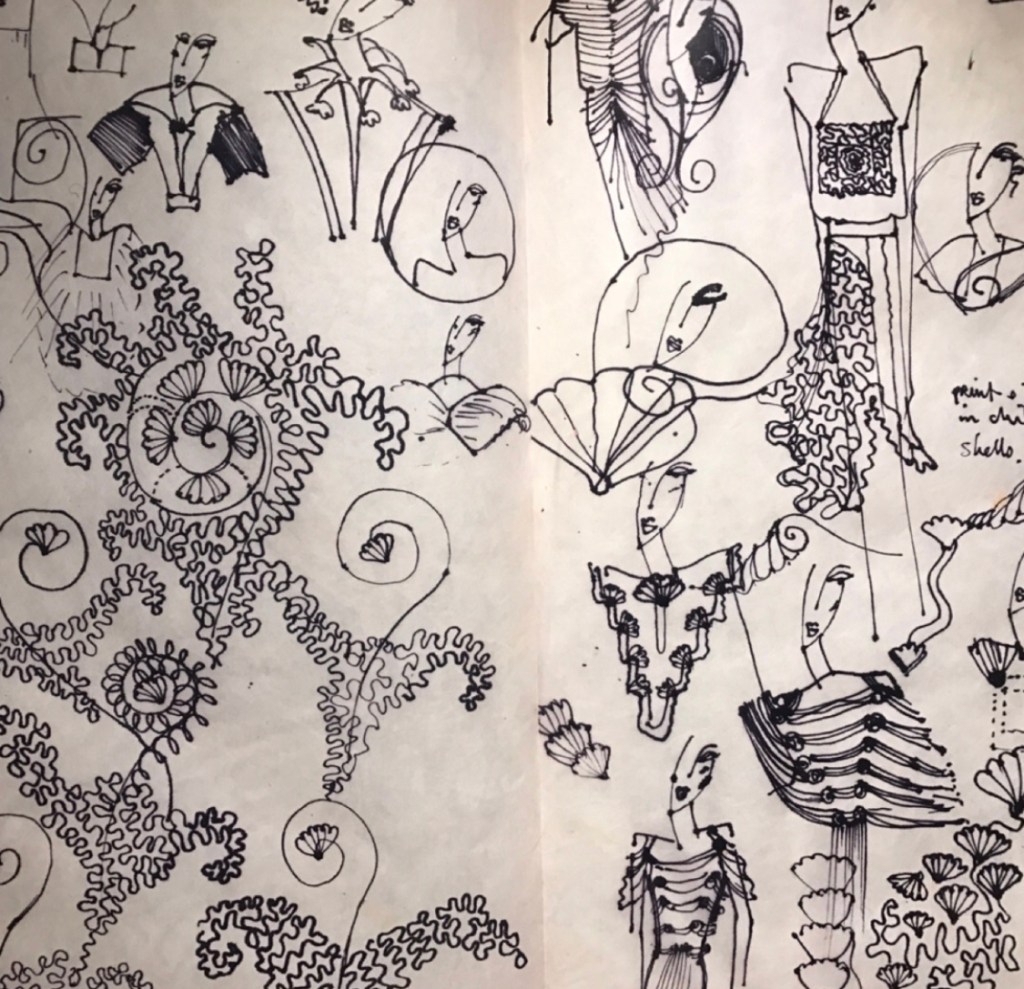
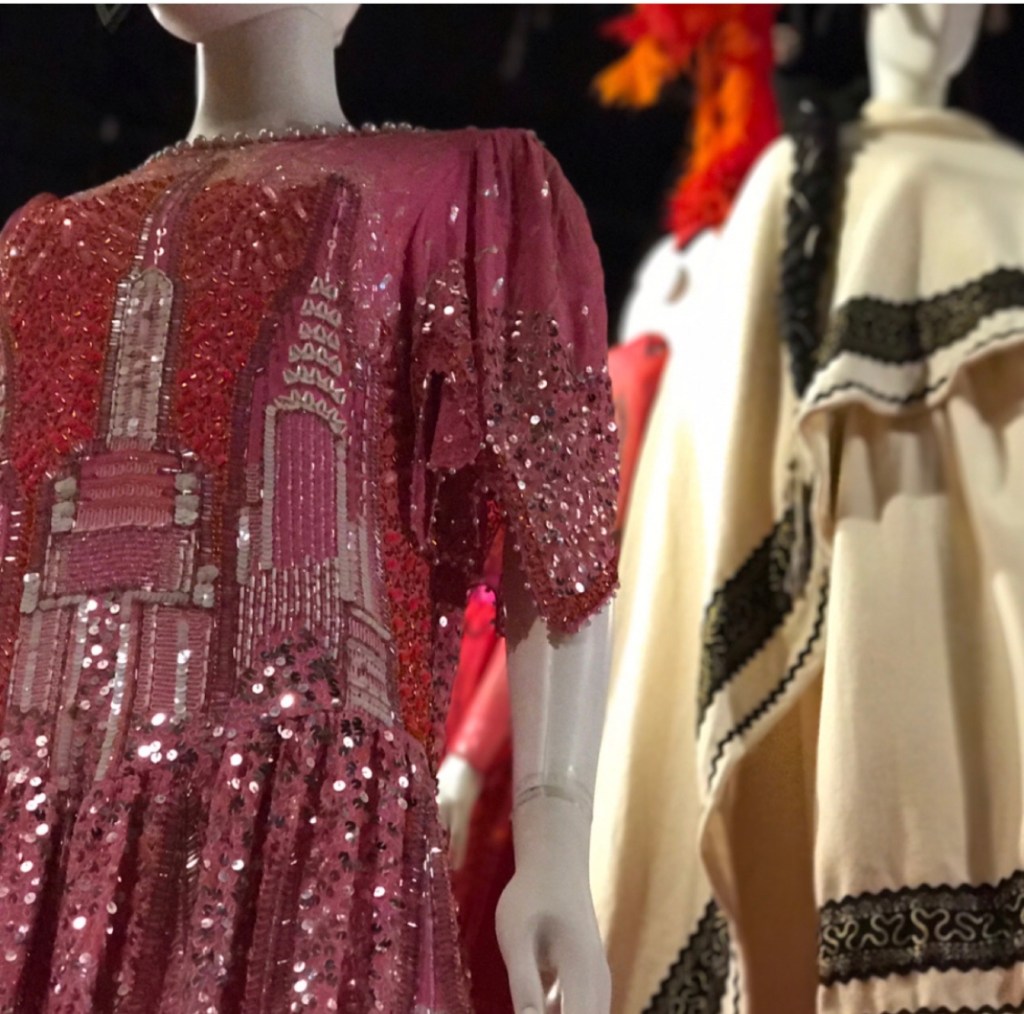
In the field of fashion design, the design of fabrics will bring a lot of inspiration. The fashion & textile museum is a fashion museum in South London with a theme of fashion and fabrics, called FTM.
Since the time I went to visit was not a weekend, there were not many people in the museum. Most of them were students who studied art or those who love fashion design. There are not many spaces in the upper and lower floors of the museum, and some designer or artist designs, fabric techniques and graphic designs are regularly exhibited.
The fashion & textile museum was founded by the fashion guru Ms. Zandra Rhodes and the design was designed by the famous Mexican architect Ricardo Legorreta. The exhibits are mainly 20th century costumes and textiles, mainly featuring contemporary clothing design and textured fabrics.
Throughout the exhibition, I learned a lot about the secondary design of fabrics, including embroidery, embellishment, stitching, inlaying, knitting, hollowing, washing, sand washing, printing and dyeing, tie dyeing, batik, hand-painting, inkjet, etc. For example, tie-dyeing is to first sew on the fabric to prevent dyeing. Then the fabric is put into the dyeing tank for infection. After dipping, the tied or sewn threads are removed to form a deep-to-light halo pattern on the fabric surface. There are also three-dimensional forms such as pleating, and weaving mentioned above. For example, pleating is a method of three-dimensional composition that repeatedly folds and fixes the fabric irregularly or tightens and fixes it with stitches to make the fabric show the pleating effect of pleating, thereby generating the necessary volume and beautiful refractive effect. In addition, it is also possible to combine a variety of fabrics, such as the combination of leather and chiffon to create a different effect of rigid and soft impact. In particular, the injection of high-tech elements into traditional fabrics has become a new leap in fashion design. The aesthetic form of the fabric is mainly reflected in the texture of the material. The texture is the different psychological feelings given by the touch feeling, such as: rough and smooth, soft and hard, light and heavy, etc. The visual effect of the texture can not only enrich the shape of the fabric. Expression, and has the aesthetic characteristics of dynamic, creative expressionism. Therefore, from the application and performance of the texture of the fabric, it can be directly seen whether the designer’s concept expression is accurate.
During the London Field Trip, we visited
the exhibitions at the Wellcome Collection. We can explore connections between
science, medicine, life and art through our permanent and temporary exhibitions.
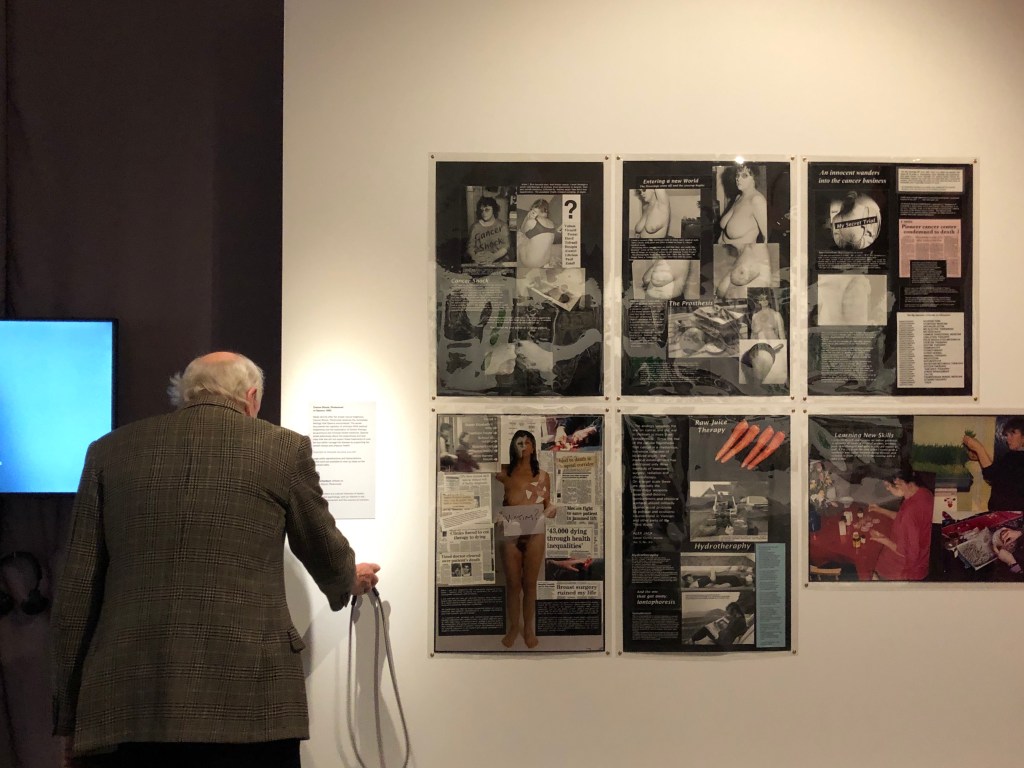
Misbehaving Bodies: Jo Spence and Oreet Ashery
First, we visited the exhibitions of Jo Spence and Oreet
Ashery, who explored the performance of chronic diseases and regained the
notion of “behavioural abnormalities”. From the entire exhibition, it can be
seen that the work of influential photographer Jo Spence (1934-92) documented
her diagnosis of breast cancer and the subsequent medical system throughout the
1980s. Her original and confrontational photography was exhibited with Oreet
Ashery (born 1966), the award-winning mini-series Revisting Genesis (2016).
Moreover, Ashery’s work in political work explores the loss of the digital age
and the real experience of chronic diseases.
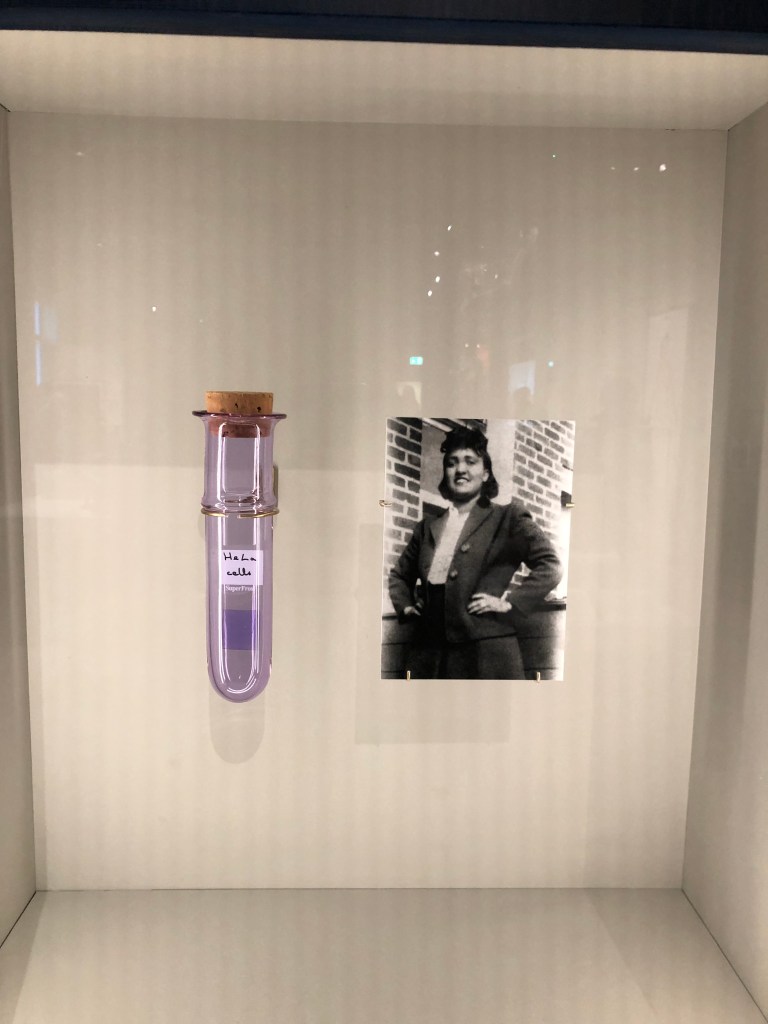
Being human
“Being human” is my
favorite exhibition, which explores the significance of becoming a human being
in the 21st century. The entire exhibition reflects our hopes and fears about
new medical knowledge and the changing relationships we have with ourselves,
each other and the world. The gallery has a collection of 50 works of art and
articles in four parts: genetics, thought and body, infection and environmental
breakdown. Visitors can explore identity, health and trust in a changing world
during the visit.
Medicine Man
Sir
Henry Wellcome is an enthusiastic traveler and collector – accumulating over
one million books, paintings and objects from around the world. Most of his
collections are concentrated in two places that are most fascinating to him –
health and medicine. Here, you can see how people perceive the foundations of
life for centuries – birth, health, gender and death. Explore a wide variety of
items, including a group of Japanese sex toys from the 1930s, a unique set of
offerings, and some diagnostic dolls that were used by women in the 18th
century in China to show male doctors where they feel pain. The exhibition
features Napoleon’s toothbrush, Nelson’s razor, Charles Darwin’s crutches,
Florence Nightingale’s moccasins, and even King George III’s hair.
This
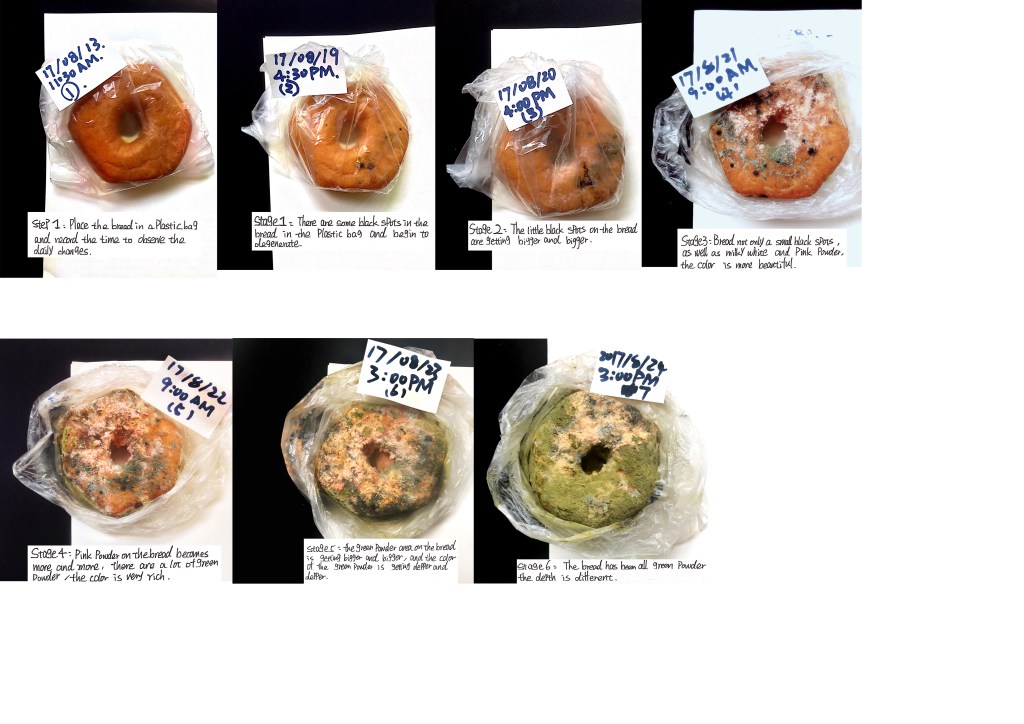
week, in order to complete Part 2 of the Biomimicry Project, I made a
biologically moldy experiment, which is a record of the process of moldy bread.
I bought a donut and placed it outdoors, then took a photo every day to record
the moldy changes of the doughnut. I have carefully observed the moldy changes
in the bread, including changes in the color and shape of the mold. I think the
shape and color of the mold can be used as a pattern in his own work, such as
fabric design and product design.
Of course, the most important reason for me to do this
experiment is because I think that everything that exists has its own life, and
the way to prove their existence is diverse. The process of bread mold also
reflects the change of bread life from another angle. Although this was
originally an abstract concept, bread in an external environment, that is, in a
passive situation, it has produced changes, and this change has thus proved the
existence of its life. The gradual change in mold allows the observer to
clearly recognize that the organism is independent and transient.
Through this observation, I summarized the factors
related to mold growth, which have the following points:
1. The PH required for mold is acidic.
2. The mold growth requires a certain humidity, water
activity (that is, the part of water that can be really used by
microorganisms). The relative content should not be lower than 0.7.
3. The mold has its own suitable temperature, and it is
most suitable for breeding at this temperature.
4. As for the illumination problem, the mold is a
heterotrophic organism, so it is not dependent on light in a biological sense.
But the light may affect the moisture and temperature. Temperature, moisture,
which can affect mold growth.
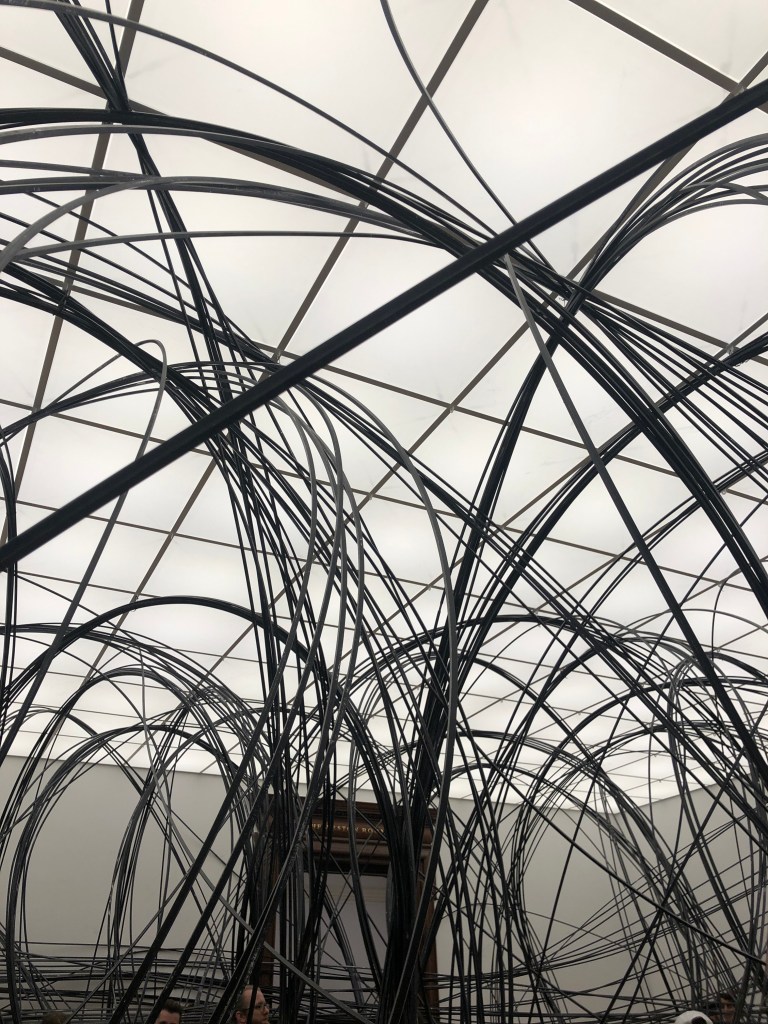
This week I went to visit the British installation artist
and sculptor Antony Gormley at the RA exhibition. I feel that I have
re-recognized the reinforced concrete. This exhibition has a total of 13 rooms,
which is very interactive. The modern art feels largely and space. The game,
the tough material became soft under Gormley’s hands, and the works on display
also had different meanings because of human intervention.
One of the rooms’ works is filled with a huge steel ring that is described as a “sketch” where people can walk freely. It can be seen that the exhibition explores the artist’s extensive use of organic, industrial and elemental materials for many years, including iron. Steel, hand-made lead, sea water and clay. The exhibition also shows his rare early works from the 1970s and 1980s, some of which were sculptures created by artists using their own bodies as tools, and some of which are his sketches.
My favorite piece is a black square pipe. Each visitor will line up from the entrance of the pipe. When you first enter, there is a little bit of light. Then there is a road that has no light at all. Extending your hands can estimate the distance of any wall. After this darkness has passed, you can see the weak light source, and the very weak shadow projected by the human body on the wall. Every visitor can have a great experience.





 Aiyu's blog